Listed homes
Listed building consent, and living with a listed house
If your house is listed, any work that affects its character as a building of special architectural or historic interest needs listed building consent, inside or out, whether or not you also need planning permission. This guide explains where the line falls, how to apply and how to keep the project on the right side of it.
The law: Planning (Listed Buildings and Conservation Areas) Act 1990, sections 1, 7 to 9 and 16; Historic England Advice Note 16. Sources last reviewed in November 2026.
In this guide
- What listing protects
- The three grades of listing
- The test: does the work affect character?
- When planning permission is also needed
- Getting certainty before you apply
- The application, step by step
- Choosing who will carry out the work
- Costs to plan for
- If work has already been done without consent
- Questions readers ask
What listing protects
Listing is a national designation made by the Secretary of State on advice from Historic England. It covers the whole building, not just the parts described in the list entry. Section 1(5) of the 1990 Act extends protection to objects and structures fixed to the building, and to structures within its curtilage that formed part of the land before 1 July 1948. A Georgian garden wall, a Victorian coach house behind the main house or a cast iron range fixed in the basement can all be part of the listed building.
The list entry description was historically written to help identify a building, not to catalogue what matters. A common mistake is reading a short entry that mentions only the front elevation and assuming the interior is not protected. It is. Entries made or amended since 2013 can expressly exclude certain parts or features, so read yours closely, but in an older entry silence means nothing.
Listing applies across England, but the grade decides who looks at your application.
The three grades of listing
Historic England recommends a grade when a building is listed, and the Secretary of State for Culture, Media and Sport makes the decision. There are three grades in England. They describe how much interest the building has, not how much protection it gets: the legal test in section 7 is identical for all three.
Grade I
About 2.5% of listed buildings
Buildings of exceptional interest. Cathedrals, great country houses, the finest town houses. A handful are ordinary-looking homes inside a significant group.
Grade II*
About 5.8%
Particularly important buildings of more than special interest. Often a terrace with an outstanding interior, or a house by a known architect.
Grade II
About 91.7%
Buildings of special interest. This is the grade most listed homes have, from Georgian terraces to weatherboarded cottages and early council housing.
What changes with the grade is the process. For Grade I and II* buildings the council must notify Historic England, which comments on the application and can ask for changes; for Grade II buildings it does so only for certain works, mainly substantial demolition. Expect more scrutiny and often more time at the higher grades. Wales, Scotland and Northern Ireland run separate systems with their own grades, so this page applies to England only.
To find a grade, search the National Heritage List for England by address or on its map. The entry gives the grade, the date of listing and a description. Many local authorities also keep a separate local list of non-designated heritage assets; local listing does not require listed building consent, but it is a material consideration in planning decisions.
The test: does the work affect character?
Section 7 of the Act says no one may demolish a listed building, or alter or extend it "in any manner which would affect its character as a building of special architectural or historic interest", unless the works are authorised. That test is about effect, not size. Works can need consent because of what they touch, how they are done or how much is done. They also need consent if they would improve character, such as reinstating a missing glazing pattern.
Historic England's Advice Note 16 groups works into three bands, and it is the most useful way to think about your own project.
| Band | Examples | Consent |
|---|---|---|
| Clearly no effect | Clearing gutters, redecorating previously painted walls in a similar finish, replacing a modern kitchen or bathroom fitted against modern partitions, maintaining services in existing routes | Not needed |
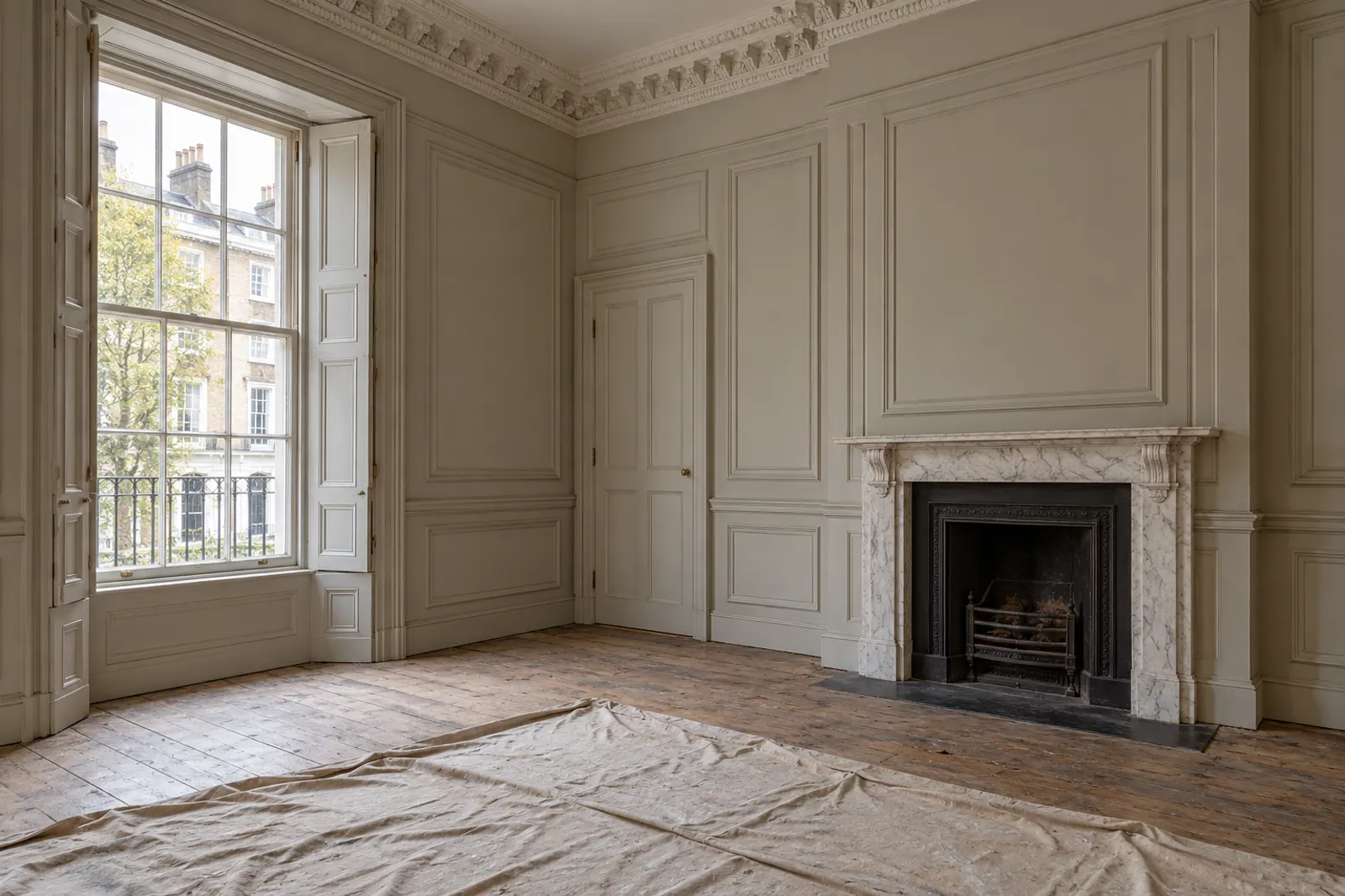
| Clearly affects character | Extensions, removing or moving internal walls, opening up fireplaces or blocking them, removing panelling, cornices, shutters or historic doors, replacing historic windows, double glazing in historic frames, new rooflights, dormers, rendering or painting brickwork, changing roof coverings, inserting steel beams, structural alterations to floors | Needed |
| Depends on how it is done | Like-for-like repairs, repointing, re-roofing with matching slate, rewiring, new plumbing runs, insulation, secondary glazing, replacing plaster, sanding floors | Ask first and keep the answer in writing |
The middle row is where owners get caught. Repointing a wall in cement mortar where the original was lime changes the way the wall handles moisture and how it looks, so it can affect character even though it is "only repair". Replacing a small area of cracked lime plaster in lime is maintenance; stripping a whole room back to brick and re-plastering in gypsum is alteration. Scale and method matter.
Carrying out, or causing someone to carry out, unauthorised works that affect character is an offence under section 9 of the Act. It can lead to an unlimited fine and, in serious cases, imprisonment. The council can also serve a listed building enforcement notice requiring the work to be reversed, and there is no time limit on enforcement. The liability for putting it right passes to later owners, which is why conveyancing searches ask about consents.
When planning permission is also needed
Listed building consent is a separate regime from planning permission. Many projects need both, and they are usually applied for together on the same forms.
- External changes and extensions to a listed house usually need planning permission as well as consent. Permitted development rights still exist for some works to listed houses, for example a modest single storey rear extension within Class A limits, but listed building consent will be needed for the same work and the council will judge it on heritage grounds.
- Garden buildings within the curtilage of a listed building are excluded from Class E permitted development, so a garden room or shed needs planning permission.
- Internal works are not development for planning purposes, so they need only listed building consent.
The consent check sets out both answers separately for your project.
Getting certainty before you apply
Unsure whether a job touches the building's character? There are three ways to settle it, each firmer than the last.
- An informal written view. Email the council's conservation officer with photographs and a short description. A reply saying consent is not needed is helpful evidence but not binding.
- Pre-application advice. Most councils charge for this. For listed houses in London boroughs, typical 2026 fees run from about £300 to £900 for a householder scheme, sometimes more with a site visit. You get a considered view on whether consent is needed and what is likely to be acceptable.
- A certificate of lawfulness of proposed works. Since 2014 you can apply for a formal certificate confirming that described works would not affect character and so do not need consent. There is no fee, and Historic England notes that a certificate lasts 10 years. It cannot be used retrospectively. See lawful development certificates for how this compares with the planning version.
The application, step by step
- Understand the building. Before anything is drawn, record what is there: plan form, joinery, plasterwork, roof structure, evidence of past changes. A measured survey and a photographic record are the foundation of everything that follows.
- Design around significance. Put change in the places that matter least: later back additions rather than the principal rooms, modern partitions rather than original spine walls, the rear rather than the street front.
- Prepare the documents. A location plan, existing and proposed plans and elevations, sections where structure changes, large-scale joinery details where windows or doors are involved, a schedule of works and a heritage statement explaining significance and impact. The council will not validate an application without a heritage statement.
- Submit. Online through the Planning Portal or directly to the council. There is no application fee for listed building consent. If planning permission is needed too, the householder fee of £548 (England, from 1 April 2026) applies to the planning element.
- Consultation. The council displays a site notice and publishes a press notice, each giving at least 21 days for comments. For Grade I and II* buildings it notifies Historic England; for demolition it also notifies the national amenity societies.
- Decision. The target is 8 weeks from a valid application. In practice many heritage cases involve a request for amended drawings and an agreed extension of time. The timeline estimator shows a realistic range.
- Conditions. Expect conditions requiring approval of details before work starts: sample panels of brick and mortar, 1:5 or 1:2 joinery sections, a method statement for opening up. Build the time to discharge them into your programme.
Consent normally lasts three years from the decision date. Work has to begin within that period, and it must follow the approved drawings and conditions exactly. A variation agreed on site with a builder but not with the council is unauthorised work.
Choosing who will carry out the work
Consent is only the first half. The quality of the project is decided by the people who open up the building, and a careless contractor can turn consented work into unauthorised work in a single afternoon by removing a cornice that was meant to stay or by cutting a joist the engineer had not seen. Treat contractor selection as part of the consent process, not something that starts after it.
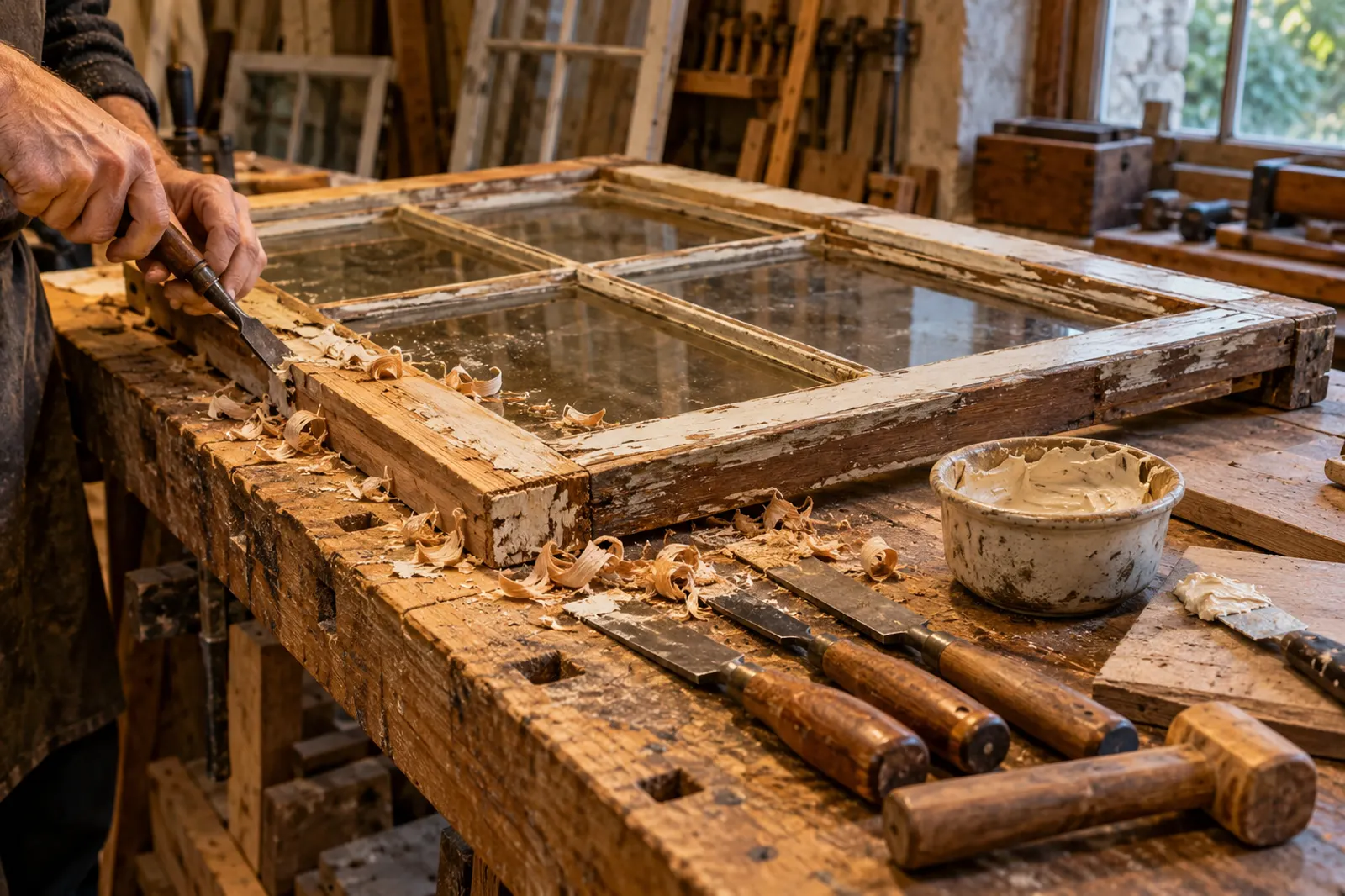
Ask for completed jobs on listed buildings of a similar age and type, and ask what they found when they opened up and how they dealt with it. Look for a firm that will write a method statement for each stage of disruptive work: how floors will be lifted and numbered, how plaster will be protected, how temporary support will be installed. Check who will actually be on site; a well-qualified contracts manager is of little use if the labour is subcontracted to people who have never worked with lime. A contractor who is used to dealing with the conservation officer, who knows to stop and report a discovery rather than "tidy it up", and who prices for discharging conditions properly will save you money over the life of the job. If you want a structured list of questions to ask at tender stage, this guide to choosing a contractor for a listed building is a useful starting point, whichever part of the country you are in.
For specialist trades, membership schemes help narrow the field: for example the Guild of Master Craftsmen, the Building Limes Forum for lime work or the Institute of Historic Building Conservation directory for consultants. Use them to build a shortlist, then judge the people by their past work and their method statements.
What to put in the contract
- The approved drawings and decision notice, with every condition listed and an owner named for discharging each one.
- A requirement to stop work and notify you if historic fabric not shown on the drawings is uncovered.
- A provisional sum for repairs that only become clear on opening up, so there is no incentive to cover them over.
- Protection of retained features (shutters boxed in, floorboards covered, cornices sheeted) as a priced item.
Costs to plan for
| Item | Typical range | Note |
|---|---|---|
| Listed building consent fee | £0 | No statutory fee |
| Planning permission (if needed) | £548 | Householder fee from 1 April 2026 |
| Discharge of conditions | £89 per request | Householder fee for planning conditions; listed building consent conditions have no fee |
| Pre-application advice | £300 to £900+ | Set by each council |
| Measured survey | £800 to £2,500 | Depends on size and whether elevations are included |
| Heritage statement by a consultant | £600 to £2,500 | Simple internal works at the lower end |
| Architect or designer | Varies widely | Look for conservation accreditation (for example RIBA conservation register or AABC) |
VAT at the standard rate applies to alterations to listed buildings; the old zero rate for approved alterations ended in 2012. Repairs and maintenance have always been standard rated.
If work has already been done without consent
You can apply for listed building consent retrospectively under section 8(3) of the Act. If granted, it authorises the works from the date of the consent, but it does not wipe out an offence already committed. If you have bought a house and discover unauthorised work from a previous owner, talk to the conservation officer early. Councils generally prefer to resolve these cases through a retrospective application or agreed remedial works rather than prosecution, but the enforcement liability does sit with the current owner.
Questions readers ask
- What are the different grades of listing?
- In England there are three: Grade I (exceptional interest, about 2.5% of listed buildings), Grade II* (more than special interest, about 5.8%) and Grade II (special interest, about 91.7%). The legal protection is the same for all three; the higher grades bring Historic England into the application.
- How do I check if a building is listed?
- Search the National Heritage List for England on the Historic England website by address, list entry number or map. Your council's planning search and the conservation officer can also confirm it, and a property search when you buy will show it.
- Do I need listed building consent to paint my front door?
- Repainting in the same or a similar colour is maintenance. A marked change of colour on a prominent elevation can affect character, and many councils treat it that way. Ask before changing it.
- Can I replace single glazing with double glazing in a listed building?
- Rarely in historic frames. Secondary glazing on the inside, or slim glazing in new sashes where the existing windows are modern replacements, are the usual routes. See sash windows in older houses.
- Does consent cover building regulations?
- No. Building regulations approval is separate. Some regulations can be relaxed where compliance would harm a historic building, and building control officers can agree a balanced approach, but you still need to apply.
- How long does listed building consent take?
- The statutory period is 8 weeks from a valid application. Allow 10 to 16 weeks in practice for a scheme with design discussion, longer for Grade I and II* buildings where Historic England comments. Add time before the start for any conditions.
- Are the planning rules changing for listed homes?
- The legal test for listed building consent has not changed. The Levelling-up and Regeneration Act 2023 lengthened enforcement periods for ordinary planning breaches to 10 years, but listed building enforcement has never had a time limit. Planning fees were raised again from 1 April 2026; listed building consent itself is still free.
Where we checked
- Advice Note 16: Listed Building Consent, Historic England
- Search the National Heritage List for England, Historic England
- Planning (Listed Buildings and Conservation Areas) Act 1990, legislation.gov.uk
Not sure which of these applies to you? Answer seven questions and see which consents your project needs.